Runner Coaster
Dual CatArcade
4.3190.00 Reviews
- Version
- 2.5.6
- Installs
- 10.00M
- Age Rating
- Teen
Screenshots
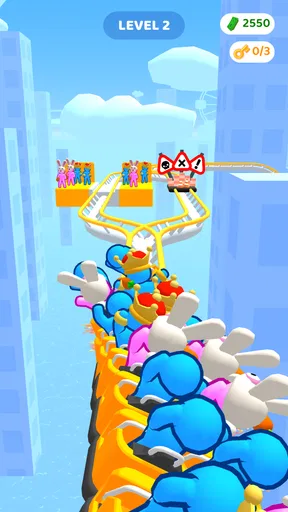
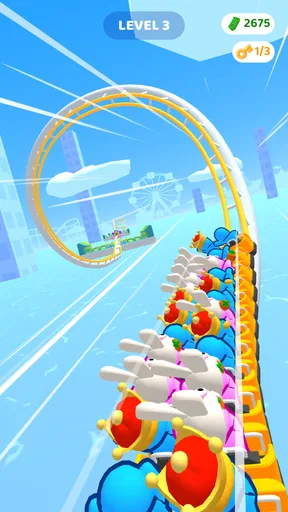
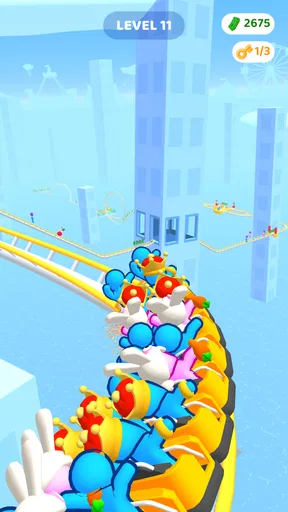
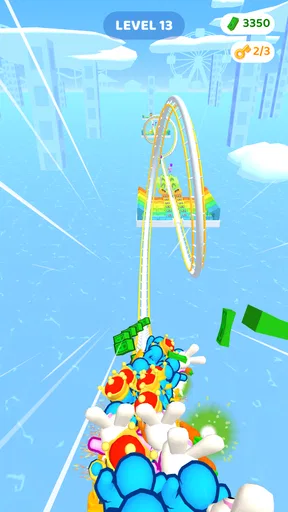
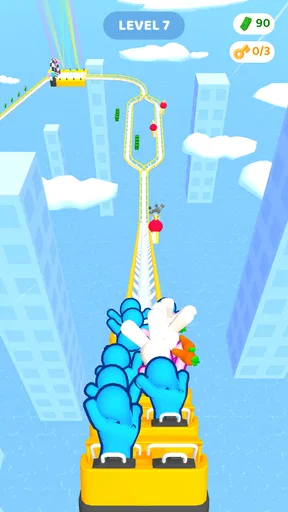
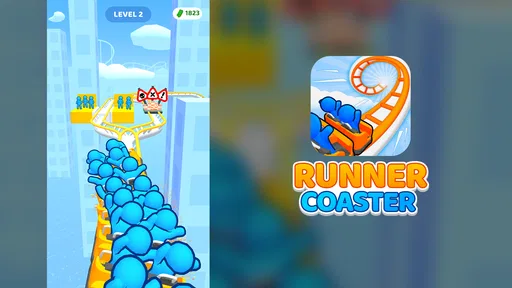
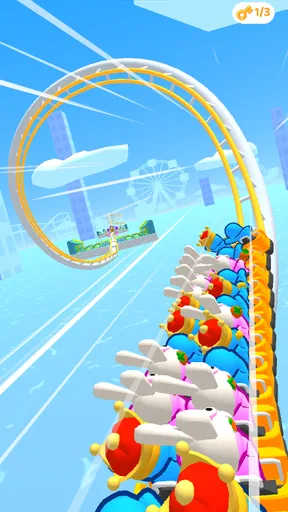
Our Review of Runner Coaster
 Analysis by Appyee
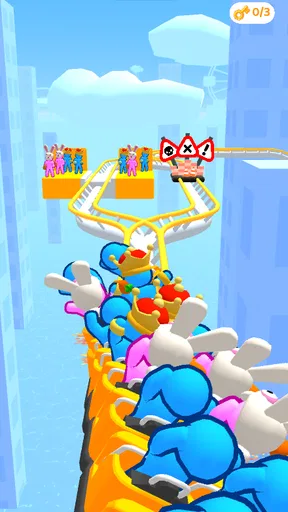
Runner Coaster is the kind of arcade game I open when I want something immediate, visual, and easy to understand without committing to a long session. Its central challenge is simple: guide a roller coaster through a course and try to reach the end. That sounds straightforward, but the appeal comes from how quickly a relaxed attempt can turn into a careful exercise in timing and control.
Developed by Dual Cat, the game is free to download and sits in the arcade category. It has built a sizeable audience, with more than ten million installs and an average rating of 4.3 from roughly thirty-seven thousand ratings. Those figures do not automatically make it a perfect fit for everyone, but they do match my impression that this is an accessible pick for short bursts of play rather than a deep simulation or a long-form adventure.
I reviewed it as a casual player first, then paid closer attention to the habits that make repeated attempts less random. The most useful way to approach it is not to rush every section. Instead, I found that progress improves when I treat each run as a quick lesson: identify what caused the failure, adjust one part of my timing, and try again. The game rewards repeatable control more than blind speed.
How a normal run feels from the first attempt
The basic workflow is refreshingly direct. I start a run, watch the coaster move through the track, and respond to the obstacles or changes in the route. There is no need to learn a complicated control scheme before playing. That makes it suitable for a short break, especially when I only have a few minutes and want an arcade challenge that begins immediately.
At first, I tended to react to whatever appeared directly in front of me. That approach works for the opening attempts, but it quickly becomes unreliable. The better habit is to look slightly ahead and prepare for the next part of the track instead of waiting until the last possible moment. When the course becomes more demanding, the difference between early preparation and late panic is often the difference between continuing and restarting.
This is also where the game’s simple presentation helps. Because the objective is so clear, I can focus on movement and timing rather than sorting through menus, equipment, character abilities, or a large inventory. Players who enjoy compact arcade loops will probably understand the appeal immediately. Players looking for a story, a detailed progression system, or extensive customization may find the experience too narrow.
My everyday use case is a short waiting period: I can play one attempt while waiting for an appointment or during a brief commute break, then stop without feeling that I have abandoned a complicated campaign. A failed run does not require a long recovery period. I simply try again with a slightly different rhythm. That low commitment is one of the strongest reasons to keep it installed.
What I watch during each attempt
I divide a run into three mental jobs. First, I check the immediate route so I do not miss the next action. Second, I watch the spacing between hazards and safe sections. Third, I notice whether my failure came from acting too early, acting too late, or losing attention. This small checklist prevents me from blaming the course for every mistake.
The third point matters more than it may seem. Some failed attempts are caused by poor timing, while others happen because I stop looking ahead after a successful maneuver. A good section can create overconfidence, and that is exactly when I sometimes make a careless input. Treating every segment as a fresh timing problem keeps the run more consistent.
I also avoid changing several habits at once. If I alter my speed, reaction point, and attention pattern after every failure, I cannot tell what actually helped. Instead, I make one adjustment and repeat the section. That turns the game from a sequence of frustrating restarts into a small practice routine.
Settings and practical checks before playing
There are not many layers to configure, which is part of the game’s convenience. Still, I recommend checking the device basics before judging the controls. The game supports Android devices running version 7.0 or later, and the current version is 2.5.6. Keeping the app updated is sensible when a game depends on responsive touch input, although I would not expect an update alone to transform a difficult section into an easy one.
I also check the phone’s sound level and notification behavior before starting a serious attempt. Arcade play can be visually readable without sound, but interruptions are more damaging when success depends on maintaining concentration. If I am playing in a noisy place, I use visual cues and keep the session short rather than pretending I can give the game full attention.
Screen position is another practical detail. I prefer holding the phone in a way that leaves my active finger away from the edge of the display. A cramped grip can make a perfectly reasonable control feel inconsistent, especially when I am trying to respond quickly. This is not a special feature of the game; it is simply a useful way to reduce accidental touches during a demanding run.
The content rating is Teen, so I would not choose it automatically for a very young child without checking whether the game’s presentation and challenge suit them. For older children, teenagers, and adults who enjoy arcade repetition, the format is easy to understand. The important question is less about complexity and more about tolerance for restarting the same type of challenge until the timing becomes familiar.
The game is free, but it includes in-app purchases priced at $2.49 per item. I would approach those purchases carefully and decide in advance whether I want to spend anything. The free entry point is enough to discover whether the core loop suits me. If I enjoy the game, I can then consider optional spending as a convenience rather than assuming it is necessary to begin.
Small preparation habits that improve control
Before a focused attempt, I close anything that may pull my attention away and make sure my grip is stable. I do not play with one hand if the phone feels difficult to control that way. The goal is not to create a professional setup; it is to remove avoidable distractions so I can judge the game fairly.
I also use the first few seconds of a run as a calibration period. Rather than immediately chasing a perfect result, I observe how quickly the coaster responds to my input and how much time I have to prepare. This makes later decisions calmer. A player who understands the response rhythm can act deliberately instead of tapping because the screen looks busy.
Another useful habit is to stop after several unfocused failures. Repetition only helps when I am learning something. If I am making the same mistake because I am tired or distracted, continuing can make the game feel unfair when the real problem is my attention. Taking a short break often produces a better attempt than forcing another restart.
Faster patterns for experienced players
Once the basic workflow feels familiar, I stop thinking of each obstacle as an isolated surprise. I look for patterns in the route and try to connect my actions into a smooth sequence. The fastest successful run is not always the one with the most frantic inputs. In my experience, it usually comes from removing hesitation and choosing a consistent moment to react.
A helpful approach is to identify a visual landmark before each difficult passage. That landmark might be a bend, a change in elevation, or another obvious point in the course. I use it as a reminder to prepare rather than waiting until the hazard is already close. This creates a repeatable trigger, which is much easier to improve than a vague instruction such as “be quicker.”
I also separate observation runs from record attempts. During an observation run, I accept that I may fail and concentrate on learning the order and rhythm of the course. During a record attempt, I use that knowledge and avoid experimenting unless something clearly changes. Mixing these two goals can make me impatient, because I expect a learning attempt to perform like a polished one.
When I fail near the end, I do not automatically restart with the same pace. I ask whether the earlier sections left me too hurried or mentally overloaded. Sometimes the final mistake is a consequence of a rushed opening. A slightly calmer start can preserve attention for the closing sequence, even if it does not look as fast at the beginning.
Three repeatable techniques I found useful
- Use landmarks as timing anchors. Choose a visible point before a tricky section and prepare there every time. This replaces vague reaction with a repeatable cue.
- Practice one problem at a time. After a failure, change only the timing of the action that caused it. This makes improvement easier to recognize.
- Protect the final stretch. When a run is going well, resist the urge to speed up simply because success feels close. Late overconfidence is an avoidable source of failure.
These techniques are not secret shortcuts, and they do not remove the need for practice. Their value is that they make practice more informative. A generic arcade player may restart repeatedly and hope for a better result; an experienced player creates a small routine and uses each attempt to test it.
I would not describe the game as a reflex contest alone. Visual anticipation matters just as much. If I focus only on the coaster’s current position, I am always reacting late. If I scan the route and prepare for the next change, the same course feels more manageable. That distinction is important for players who assume they are simply “not fast enough.” The real issue may be where they are looking.
Where the challenge reaches its limits
The same focused design that makes Runner Coaster easy to start also limits its long-term variety. It is built around repeating the central roller-coaster challenge, so players who need a large collection of modes, a narrative campaign, or extensive personalization may lose interest. I appreciate the narrow purpose, but I would not use it as my only arcade game for long sessions.
There is also a natural frustration curve. Early mistakes feel harmless because I am still learning the controls. Later mistakes can feel more expensive because they follow a longer sequence of successful decisions. The restart loop remains convenient, but convenience does not eliminate repetition. Anyone who dislikes retrying a familiar section should know that this is part of the experience, not an occasional inconvenience.
Another limitation is that the game’s simplicity leaves less room for strategic variety than a platformer with multiple characters or a racing game with vehicle tuning. In those alternatives, I can sometimes solve a problem by changing equipment or choosing a different route. Here, improvement depends more directly on my observation and timing. That is satisfying when I want a pure arcade test, but less appealing when I want to experiment with builds or play styles.
The free model is useful for trying the game, while the in-app purchases at $2.49 per item may be worth considering only after I know what I want from the experience. I would not spend simply because a difficult attempt made me impatient. A purchase should solve a clear convenience problem for the individual player, not replace the learning process that gives the game its challenge.
Compared with endless runners, this game feels more focused because the roller-coaster course gives each attempt a distinct sense of direction. Compared with traditional racing games, it is much lighter: there is no need to manage a vehicle, learn a broad track list, or commit to a full race. Compared with physics-based arcade games, it places more emphasis on anticipation than on experimenting with unpredictable movement. I prefer it when I want a quick, concentrated test rather than a large system to master.
Who should choose it, and who should skip it
I would recommend it to someone who enjoys short arcade sessions, visible goals, and the satisfaction of improving through repetition. It is especially suitable for players who like noticing small timing errors and correcting them on the next attempt. The free download makes trying it low-risk, and the modest device requirement means it can suit people using an older compatible Android phone.
I would skip it if I want a substantial story, social competition, deep customization, or a relaxing game with little chance of failure. I would also hesitate to recommend it to someone who becomes frustrated by repeating a course after a late mistake. In that situation, a slower puzzle game or a more forgiving endless runner may be a better match.
iPhone and iPad users should also think about control comfort and screen size before settling into longer sessions. The experience is most enjoyable when the display is easy to see and the hand position feels natural. On a smaller screen, I would favor short attempts and regular breaks rather than extended play that increases the chance of an accidental touch.
My verdict after building a steadier routine
Runner Coaster works because it does not bury its main idea under unnecessary systems. Dual Cat has made a compact arcade game that I can understand immediately, revisit casually, and improve through deliberate repetition. The store summary asks whether I can finish the roller coaster, but my experience is that the more interesting question is whether I can learn to approach each section with the same calm timing.
Its strongest quality is the clear relationship between attention and progress. When I fail, I can usually identify a practical adjustment: look farther ahead, prepare at a landmark, avoid rushing, or protect concentration near the finish. That clarity makes retries feel useful. Its weakest quality is the limited range of the central loop, which may not hold the attention of players who expect constant novelty.
The game has been available since May 20, 2022, and its continued audience suggests that the straightforward format has lasting appeal. I would describe it as a dependable pick for brief arcade sessions, not as a replacement for a full racing game or a large action title. Its 4.3 average from around thirty-seven thousand ratings gives a reasonable picture of a game many people enjoy, while the Teen rating and optional purchases are worth keeping in mind before installing.
My final recommendation is simple: try it if you want a free roller-coaster arcade challenge that respects short play sessions and rewards focused practice. Give it a fair test by using the first attempts to learn the route instead of chasing a perfect run immediately. If the restart cycle feels satisfying, the game can become a surprisingly effective exercise in timing and visual anticipation. If you need variety, customization, or a gentler pace, choose another arcade option instead.
Verdict
Strengths of Runner Coaster
- Fast-paced gameplay is easy to pick up during short play sessions.
- Simple controls make the game accessible for younger and casual players.
- Collectible items add extra goals beyond simply reaching the finish.
- Bright visuals and energetic movement keep runs visually engaging.
- Works well as a quick time-killer when you have only a few minutes.
Limitations of Runner Coaster
- Gameplay may become repetitive after several runs.
- Progress can feel slow without frequent upgrades or rewards.
- Some obstacles may feel difficult to judge on smaller screens.
- The game may include frequent ads between or during play sessions.
- Limited depth may disappoint players looking for a long-term challenge.
Similar Picks in This Category
View All
Subway Surfers
SYBO Games4.6

Stickman Party 234 MiniGames
PlayMax Game Studio4.6

Subway Princess Runner
Ivy4.4

Temple Run
Imangi Studios4.2

Zombie Tsunami
Mobigame SAS4.6

Stack Ball - Crash Platforms
CASUAL AZUR GAMES4.5
Frequently Asked Questions
What is Runner Coaster and how does the gameplay work?
Runner Coaster is a casual endless-running game that combines fast lane-changing with roller-coaster-style movement. You guide a character or coaster along a constantly moving track, collect useful items, avoid obstacles, and try to reach the highest possible score. The controls are generally easy to learn, making it suitable for short sessions, although later sections require quick reactions and careful timing.
Is Runner Coaster free to download and play?
Runner Coaster can generally be downloaded and played without an upfront purchase, but the free version may include advertising and optional in-app purchases. These purchases can sometimes provide cosmetic items, bonuses, or other conveniences, depending on the version available in your region. Before downloading, check the store listing for current pricing, ads, and purchase details, especially if children will use the device.
Does Runner Coaster require an internet connection?
The basic running gameplay may work without a continuous internet connection, which makes Runner Coaster convenient for playing while traveling or when mobile data is unavailable. However, certain features, such as advertisements, rewards, leaderboards, cloud-related services, or promotional content, may require internet access. Availability can vary by device and app version, so offline support should be confirmed after installation.
Is Runner Coaster suitable for children and beginners?
Runner Coaster is easy for beginners to understand because its main objective is straightforward and the controls are usually based on simple taps, swipes, or directional movements. Nevertheless, the increasing speed and obstacle patterns can become challenging. Parents should also review the app’s advertising, optional purchases, privacy information, and age rating before allowing younger children to play.
What should I check before downloading Runner Coaster?
Before installing Runner Coaster, check whether your Android or iOS device meets the required operating-system version and has enough free storage. It is also worth reviewing recent user feedback, the presence of ads and in-app purchases, requested permissions, and the developer’s privacy policy. Because updates can change performance or features, downloading the official version from the Google Play Store or Apple App Store is recommended.
Play our best games!


